


UK magazines
UK magazines are mainly based in London, though some publishing groups, such as Future in Bath and DC Thomson in Dundee, are based in other cities. The Periodical Publishers Association represents 400 publishers operating in Britain, accounting for 2,300 consumer, business and professional magazines – 80 per cent of the UK magazine market by turnover. There are 8,000 titles published in Britain and they can be categorised in these sectors:
- consumer (general and specialist) sold in newsagents;
- business / trade / professional / B2B – for people at work;
- customer publishing / contract publishing /custom – produced by publishing agencies for organisations to give to their customers as a form of marketing;
- staff magazines: produced by a company's internal communications team or a publishing agency to inform staff about their company
- newspaper supplements are free with a daily or Sunday paper;
- part works – a set number of issues builds up into an 'encyclopedia' on a specific topic;
- academic journals – for university-level discussion of all sorts of arcane topics.
Consumer magazines
Consumer magazines make up the bulk of the titles for sale in Britain's newsagents. They may be general titles that aim to entertain and inform (such as GQ, Elle, Radio Times) or consumer specialist titles aimed at a specific interest or hobby (Car, Total Film, Gardeners' World). There are about 2,800 UK consumer magazines.The biggest consumer magazine publishers (by newsagent sales revenue):
- Bauer (German group that took over the 2nd largest group, Emap, in 2008): 26%
- IPC (Time Warner): 20%
- Burda (another German group that acquired Immediate Media, publisher of Radio Times, in a deal worth £260m in 2017): 8%
- National Magazines (Hearst): 7%
Most UK magazines for consumers – 90% – are sold by newsagents or supermarkets. Smiths News, owned by Connect Group, is the biggest distributor with a 55% share of the UK market It delivers 35 million newspapers and 11 million magazines to 30,000 retailers each week. The UK is more reliant on newsagent sales than the US and continental European countries, where subscriptions dominate.
Total sales of such magazines have been falling since 1960 (with far fewer titles) as the role of magazines and newspapers as the main purveyor of information and entertainment was usurped by television. Figures from the Advertising Association put total sales at 2,100 million copies in 1970, a figure that fell to under 1,200 million in 1992. However, there was a rise to 1,339m copies in 2004 before dropping back to 1,000 million by 2017. Overall, sales are falling at 5% a year.
Launches in the past ten years have numbered 421-602 annually, according to WH Smith.
The industry directory British Rates and Data (Brad) divides consumer titles into 23 subject areas, from buying and selling (113 titles) through home interest (107) to youth (205). These subjects may be further divided, for example, the youth area has 12 boys magazines, 21 for girls and 26 teenage and pop titles.
Magforum has case studies of the subject areas listed in Table 1.
Profiles of consumer magazine publishers
| Table 1. Subject case studies on Magforum | ||
| Business | Cars | Computers |
| Extreme sports | Men's magazines | Men's weeklies |
| Homes and interiors | Money & finance | News magazines |
| Property | Teen titles | Travel & holiday |
| Women's glossies | Women's weeklies | Yachting & boating |
Business / professional / trade / B2B
Business magazines, which may also be called trade or B2B (business to business) magazines are for people at work. There are about 5,100 such titles in the UK. Brad lists 44 subject areas, including aeronautical (60 titles), energy (75) and veterinary (26).Profiles of business magazine publishers
Customer magazines
Customer magazines, which may also be called contract or custom magazines, are produced by publishing agencies for companies to give to their customers as a form of marketing. This sector has expanded greatly since the mid-1980s.Contract magazines are usually given away free to customers in very large numbers. Print runs for the biggest titles exceed those of even the best-selling consumer titles. Magazines produced for the National Trust, Tesco and Asda all had free circulations of 2.3-1.7 million copies in 2017, compared with sales of TV Choiceof 1.2 million. The most widely distributed contract title in the past 10 years was Sky the Magazine, which was sent free to subscribers of the satellite channel and had a circulation of 7 million copies a month.
Profiles of customer magazine publishers
Newspaper supplements
Newspaper supplements come free as part of a daily or Sunday paper. Most national newspaper in the UK actually publish more than one magazine each week.
Profiles of newspaper publishers
Partworks
Partworks, unlike mainstream magazines that aim to be published for as long as economically possible, have a set number of issues. They often build up into an 'encyclopedia' on a specific topic in, say, 25 parts, and are usually launched just after Christmas, when television advertising charges are at their lowest.
Academic journals
Academic journals aim to encourage university-level discussion of all sorts of arcane topics. Their identifying feature is that their subject matter is controlled by an academic board. Members of the board act as referees to vet all the articles. Authors are not paid; rather, they gain academic credibility. However, this is a very profitable industry for the publishers behind academic journals, which have a guaranteed market in university libraries. Probably the most famous academic journal is Nature. The earliest periodicals were, in fact, journals such as these.
Best-selling UK magazines
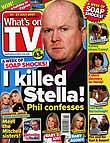 What's On TV magazine had an ABC figure of 885,595 in 2017 |
The Audit Bureau of Circulations (ABC) vets the circulation of 500 paid for and free magazines. Twice a year it publishes the official
figures for magazines (in February and August for the previous
6 months). Most of the top UK circulations – 5 of the top 7 – are claimed by customer
magazines from
companies such as Tesco and Asda. However, these are given
away ('monitored free distribution' in ABC jargon), rather than being bought ('actively purchased'). Television listings magazines such
as TV Choice and Radio Times tend to be the best-selling
UK magazines with historical circulations in excess of eight million copies a week in the 1950s, but down to 900,000 in 2017. Women's weeklies are the next big group, led by Take
a Break (half a million copies),
with the likes of Chat, Now and Heat in the region of 100,000-250,000. The biggest monthlies are Slimming World (640,000 in 2017), Cosmopolitan(404,000),
Glamour (276,000) and Woman and Home (303,000). The trend has been downward for most magazines since 1960, though two notable exceptions are The Economist, now selling 235,670 copies a week in the UK and 1.5m globally, and Private Eye, which saw sales exceed 250,000 in 2016.
Historically, Radio Times had the highest sales, at 8,832,579 copies in 1955 – a figure it claimed as 'the largest sale of any weekly magazine in the world' at the time. The women's weekly Woman was selling 3 million copies for Odhams. |
Best-selling UK magazines in 2007 and 2017
| Title | Publisher | ABC 2007 (UK & Eire) |
ABC 2017 (UK & Eire) |
| What's on TV | Time Inc UK (IPC) | 1,421,645 | 944,644 |
| TV Choice | H Bauer (Emap) | 1,390,376 | 1,219,097 |
| Radio Times | Immediate (BBC) | 1,041,705 | 684,922 |
| Take a Break | H Bauer | 1,009,795 | 542,786 |
| Reader's Digest | Vivat Direct | 709,152 | 106,335 |
| Saga (mainly subs) | Saga | 657,264 | 305,657 |
| Closer | Bauer | 561,869 | 223,342 |
| Heat | Bauer | 542,280 | 136,470 |
| Chat | Time Inc UK | 499,626 | 248,288 |
| OK! | Northern & Shell | 500,121 | 189,270 |
Best-read UK magazines
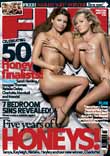 Before it was wiped out by online competition, FHM was read by 6 people for each copy sold |
Most magazines are read by more than one person. They may be read
just within a household or company, or passed on to friends, or
end up in a doctor's waiting room or hairdresser's. So each year,
the National Readership Survey (NRS) interviews 30,000 people
to find out what they have been reading. Among the best-read titles in 2017 were:
|
The oldest magazines
 The Spectator claims to be the oldest continuously-published magazine in the English language |
Lloyd's List is a weekly trade title about shipping
and insurance. It was founded in 1734 and is one of the world's
oldest magazines. The Spectator was
established in 1828 and claims to be the oldest continuously-published
magazine in the English language. (There was also a newspaper called
the Spectator founded in 1711 by Steele and Addison.)
Some titles, the women's fashion monthly Tatler being the most prominent
example, make spurious claims about their age. It claims to be 300 years old,
but has only been published for half that time, much of it in very different
formats, and has no direct link to the first Tatler. Profiles of B2B magazine publishers |
Foreign control of UK magazines
Most UK consumer titles are owned by foreign groups. The largest publisher in the UK was formed when German-based Bauer took over Emap in early 2008. IPC Media, since then the second-largest publisher, is owned by US group Time Warner. Also, Conde Nast and National Magazines are offshoots of US companies. The largest British-owned companies are now Future and Dennis (which sold its US arm in 2007). All of the top 5 consumer publishers are controlled from overseas.Of the top-selling consumer magazines, many are actually
British versions of overseas magazines. This is particularly
true of women's monthlies, with Glamour,
Vogue, Cosmopolitan, In Touch, Vanity Fair and Good
Housekeeping being US-offshoots. Elle is
a French title. The biggest-selling women's weekly, Take a
Break, is German-owned. Other big US titles include Rodale's Men's Health,
Reader's Digest, which sells about a million copies a month
and is a top 5 title, and National Geographic (also
US owned). Unusually for the UK, the final two
are subscription-based.
Profiles of customer magazine publishers
The best UK magazines
Judging the 'best' title is a subjective decision. It is extremely difficult to compare, say, Hello! with New Scientist or Reader's Digest. Such a decision might be based on sales or readership or market penetration (what percentage of the total potential market a magazine actually reaches). Former magazine publisher Brian Braithwaite set out his list of 'Britain's most important magazines' in the Guardian; the Magforum blog considered its 'Best in magazines of the 20th century'.
There has been strong growth in the independent magazines sector, which has different values and aims. Many titles are short-lived and many are not commercial, in that they are not run to make a profit.
The best designed magazines are frequently discussed, but such judgments tend to be limited in scope. Historically, magazines such as Town, London Life (Tatler) and Nova from the 1960s are often lauded for their design, but none of them was a great commercial success.
Each year, there are several industry awards for magazines:
- PPA awards;
- BSME awards;
- Journalism awards run by the Press Gazette magazine
- D&AD (Design and Art Direction) awards include magazines.
In these, panels of practitioners attempt to make judgements about the quality of magazines compared with their peers.